dollars
How to Train Heavy Safely When You Lift Alone at Home
Training alone at home has a lot of upside. You control the setup, the music, the timing, and the pace. Still, when the weight gets heavy, training without a spotter changes how you need to think. You can still push hard. You just need to set the space up in a way that protects you if a rep slows down or stops.
The first rule is simple. Never rely on luck. If you are benching, squatting, or pressing without another person in the room, your equipment setup matters as much as your program. A strong rack, safeties, spotter arms, and smart exercise choices make a real difference.
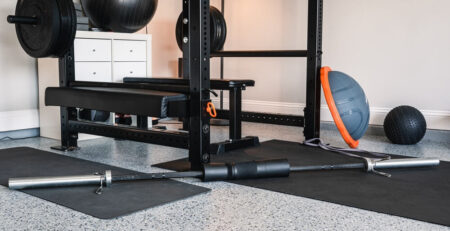
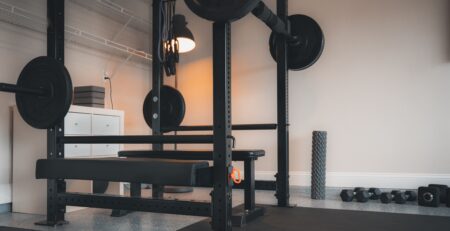
Start with the rack. If you train with a barbell, you should know how to set your safeties before every work set. On a squat, safeties need to be low enough to let you hit depth but high enough to catch the bar if you fail. On a bench, they should sit just below chest level when your upper back is set. The goal is to create room to press, while still having a backup if the rep does not come back up.
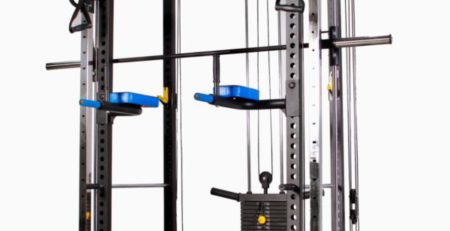
Spotter arms matter for the same reason. They are not there to look good on the rack. They are there to catch the load if the set goes wrong. If you are not using them, you are removing one of the main safety tools in a home gym.
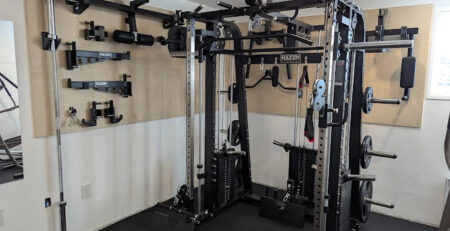
A Smith machine can also be a smart option for solo lifting, especially for presses, squats, lunges, and partial work. It gives you fixed bar travel and built-in catch points, which can help when you want to push hard without a human spotter. That does not mean it replaces all free-weight work, but it can be a useful tool for heavy training sessions.
You also need to be honest about rep limits. Training alone is not the time to take every set to failure on big barbell lifts. There is a difference between working hard and pushing past the point where control breaks down. Leave a small margin on your hardest sets. One rep in reserve can still drive progress while lowering risk.
Exercise selection matters too. Some lifts are easier to fail safely than others. Heavy dumbbell presses without a clear dump strategy can be risky. Max effort barbell benching without safeties is a bad plan. In contrast, rack pulls, machine pressing, Smith work, and controlled squat variations give you more ways to train hard while keeping risk in check.
A few good habits can make solo lifting much safer:
- Set safeties for every heavy set
- Test the safety height with an empty bar first
- Avoid clips on bench press if you do not have safeties
- Keep the lifting area clear
- Know how to bail before you need to bail
- Stop sets when form changes hard, not when things get ugly
Warm-ups matter as well. A rushed warm-up leads to bad reps, and bad reps become a bigger problem when no one is there to help. Build up to working sets in steps. This lets you check bar path, bracing, and setup before the load gets heavy.
Bracing is one of the most important parts of lifting safely. On squats, deadlifts, rows, and presses, your trunk needs to stay tight. A loose setup often shows up before a missed rep does. If your brace is off, the set is already moving in the wrong direction.
It also helps to keep your ego out of the room. Home gyms are great because they remove pressure from other people, but lifters can still create that pressure on their own. You do not need to test limits every week. You need repeatable training that lets you come back and do it again. That is how strength builds over time.
When you train alone, safety is not about being cautious. It is about being prepared. Set the rack up right. Use safeties and spotter arms. Choose lifts that make sense for the day. Push hard when the setup allows it, and stay within your limits when it does not.
That approach lets you lift with confidence, not hesitation. And in a home gym, that matters. You want the freedom to train on your own schedule, but you also want the system around you to support heavy work. When you build that system, solo training becomes safer, smoother, and much more productive.