dollars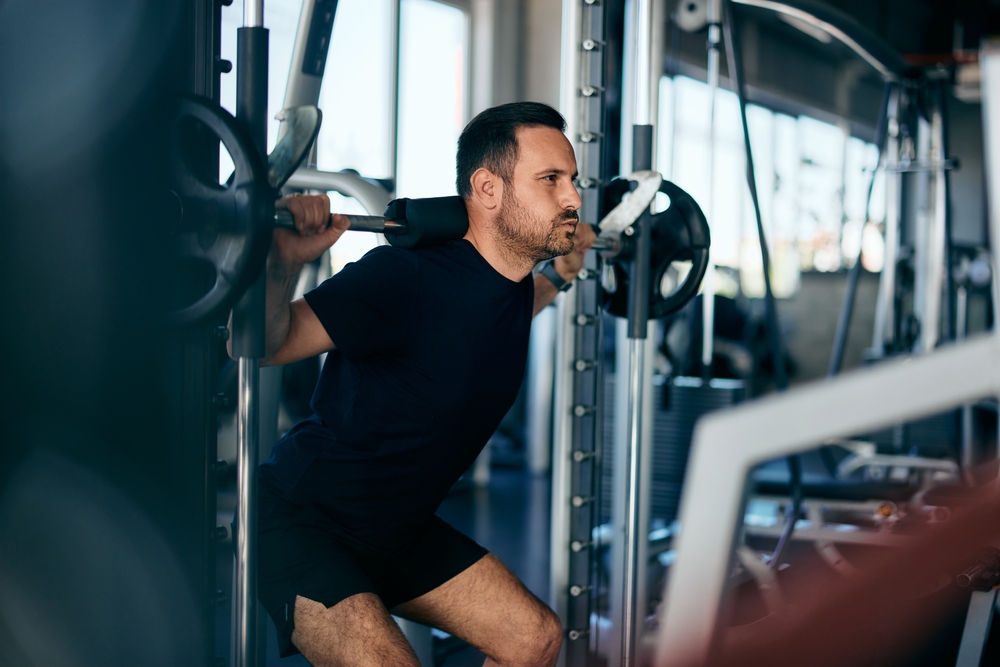
How to Squat on the Smith Machine Like a Pro
If you’re serious about strength training, the Smith Machine is a powerful tool that can add control, stability, and variety to your squat game. Whether you’re chasing hypertrophy, refining your form, or isolating specific muscle groups, knowing how to squat on the Smith Machine the right way can unlock serious results.
At MAXUM Fitness, we stock commercial-grade Smith Machines because we lifters expect reliability, smooth movement, and precision; that is exactly what these machines deliver.
In this blog, we’ll look at how to squat effectively on the Smith Machine while minimizing risks.
Why Use a Smith Machine for Squats?
Free-weight squats are a staple, but the Smith Machine gives you more control over movement, especially under heavy load. You’re not worrying about balance or bar path, you’re locked into a vertical (or slightly angled) track that allows you to focus entirely on form and effort.
It’s a game-changer for:
- High-rep hypertrophy sets
- Targeting quads, glutes, or hamstrings
- Reduced strain on stabilizers and joints
- Safer solo lifting
Smith Machine Squats vs. Traditional Squats
Traditional squats require more balance and engage stabilizer muscles as the bar moves freely. In contrast, the Smith Machine squats guide you through a fixed bar path, offering more control and safety, especially when training alone.
While traditional squats provide more natural movement, squatting on the Smith Machine helps isolate major muscle groups and reduces strain on joints. It’s a smart way to train with precision, go heavier, and stay consistent.
How to Squat on the Smith Machine Like a Pro
Let’s break it down. There are several variations, but the basics stay the same:
- Set the Bar at Shoulder Height
Step under the bar with your feet shoulder-width apart. Position the bar across your traps, not your neck. - Feet Slightly Forward
Unlike a free barbell squat, your feet should be 6–12 inches in front of your hips. This compensates for the fixed path, allowing your knees and hips to move naturally. - Unrack and Lower With Control
Twist the bar to unlock, brace your core, and lower slowly. Focus on depth, ideally just below parallel, while keeping your knees aligned with your toes. - Drive Through Heels to Rise
Push back up with control. Keep tension throughout the movement. Don’t bounce at the bottom.
Smith Machine Squat Variations for Experienced Lifters
- Narrow Stance Squats – Focus on the quads
- Wide Stance (Sumo) Squats – Hit the glutes and inner thighs
- Split Squats / Bulgarian Squats – Great for unilateral leg strength
- Front Squats – Upright torso, more quad engagement
Common Mistakes to Avoid on the Smith Machine
Even experienced lifters can slip into bad habits on the Smith Machine. One of the most common mistakes is standing too upright — remember, your feet should be positioned slightly forward to mimic the natural bar path of a free-weight squat.
Another issue is loading too much weight too quickly. While the Smith Machine provides stability, proper mechanics and control still matter to avoid injury and maximize the benefits of each rep.
Finally, avoid cutting your depth short. Shallow reps might feel easier, but using a full range of motion is key for building real strength and size. Stay focused on form, and the results will follow.
One Machine to Rule Them All
At MAXUM Fitness, we offer a comprehensive line of Smith Machines designed for serious home gyms and training studios. Smooth guide rails, rock-solid frames, and versatile features give you everything you need for safe, high-volume leg days.
That’s why our mission is simple: offer premium equipment we trust, at prices that make sense.
Whether you’re refining form or chasing your next PR, learning how to squat on the Smith Machine with purpose will push your training to the next level, with less risk and more control.