dollars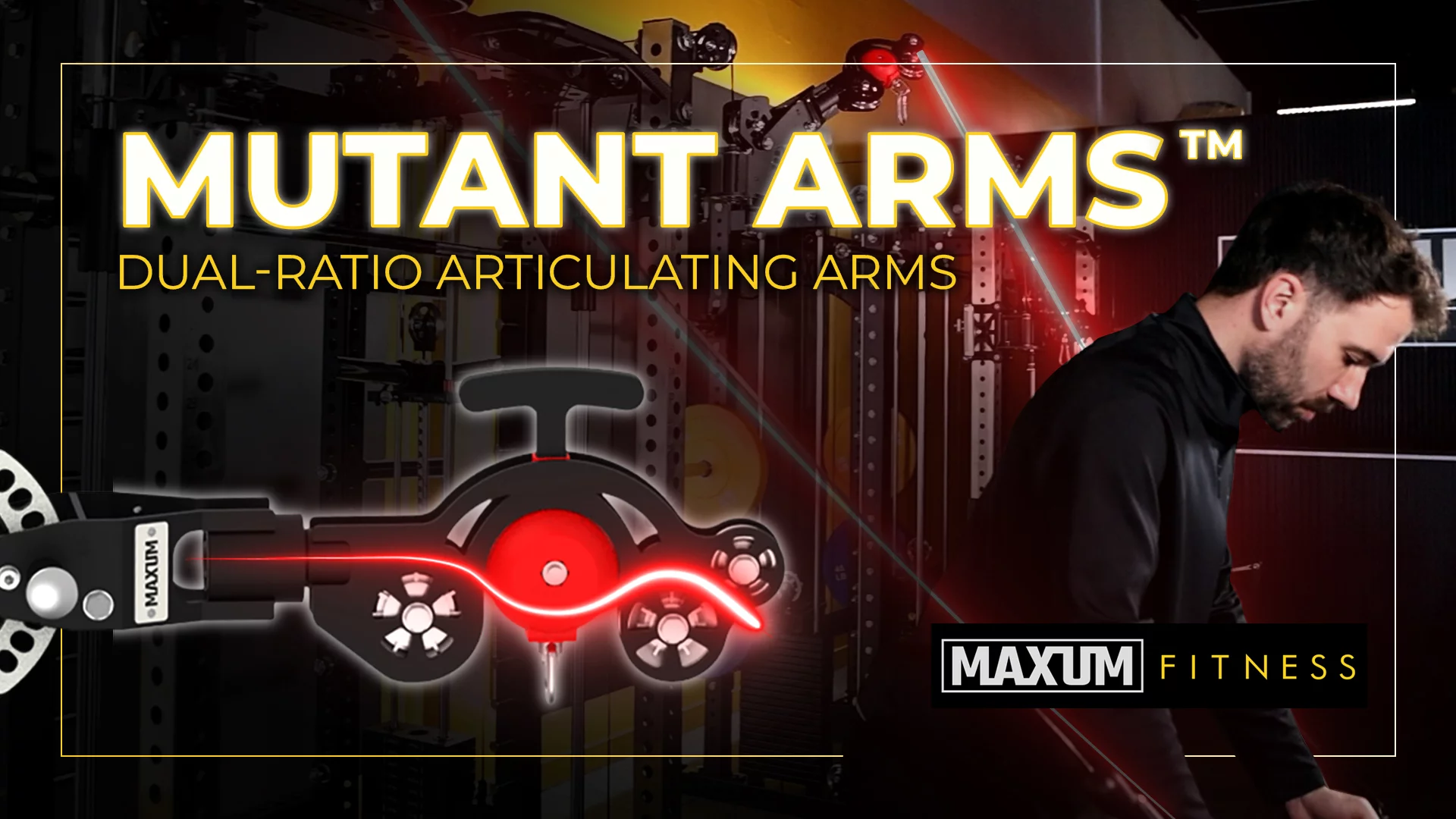
What’s Actually Inside the MAXUM Mutant Arms™ Dual-Ratio Head?
You’ve probably already read the main Mutant Arms™ post – full articulation, a true 1:1 cable option next to the standard 2:1, a direct swap onto your MAXUM X Series or SX2 rack. That’s the what, This one’s about the why. Specifically, what’s going on inside the Mutant Arm pulley system that makes this functional trainer attachment feel smooth on day one and still smooth years later.
Pulleys Aren’t an Afterthought Here
Cable machines live and die by their pulleys. Friction on the rep you’re doing right now, wear that shows up down the line – this is the same cable machine pulley wear that eventually leaves cheaper cables fraying or stiff. What decides how much you pay is pretty simple: pulley size, and how far the cable has to wrap around it.
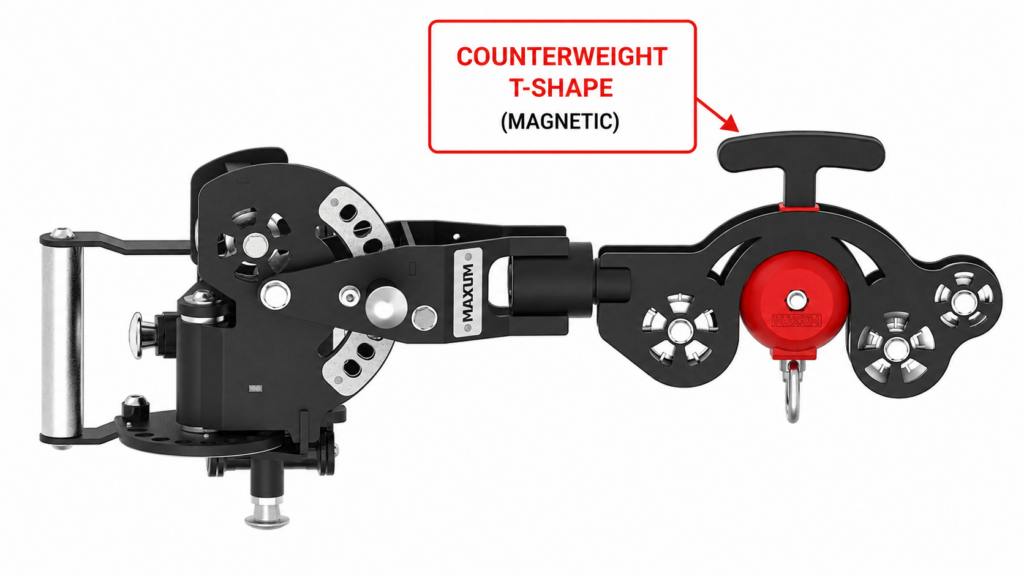
We sized ours before we built anything else. The entry pulley is 90mm, the 1:1 pulley is 70mm. A 50mm wheel would flex that same cable nearly twice as hard on every pass, which sounds like a small thing until you’ve run a few thousand reps on it.
Positioning matters just as much as size, honestly, maybe more. Our 1:1 pulley sits above the cable line. So in 2:1 mode, the cable barely touches it, just a glancing bend on the way through. Drop that pulley below the line instead, and now it’s riding the full loop on every rep, something like 180 degrees of wrap, and the entry pulley has to work harder too since the cable’s routing down and back up to get there. One badly placed pulley and suddenly the whole path is fighting itself.
None of this makes 1:1 mode wrap-free, to be clear. Any arm offering true pound-for-pound resistance runs into a big wrap somewhere, because that pulley’s carrying both cable strands (basically the full stack) on one bearing. That’s the actual reason ours is 70mm instead of smaller.
Why the Counterweight Is Magnetic
Here’s something most people don’t think about: an articulating head like this is bottom-heavy by nature. At rest, that’s a good thing, gravity just pulls it back to center on its own. But mid-rep is a different story. Pull horizontally or upward and that same weight bias twists the head off-line, so the cable starts rubbing the pulley flanges instead of sitting in the groove where it belongs.
That’s what the T-shaped magnetic counterweight is for. Snap it on and the head stays where your pull actually wants it, on curls, upright rows, standing presses, anything horizontal or upward. Take it off for pulldowns, where the head’s already stable and you don’t need it fighting anything. No tools. A few seconds either way.
The Dock Finds Its Own Way Back
Switching ratios shouldn’t feel like a chore mid-set, so we didn’t design it that way. The 1:1 pulley sits in an ABS housing that basically does the thinking for you: it holds the pulley in the right position, it self-locates when you dock it back in (it just finds its seat), and the whole swap takes seconds.
We picked ABS over metal on purpose, not to save a few bucks. It cushions the pulley every time it docks, so the steel underneath never chips. It’s also lighter, and the weight at the far end of an arm is exactly the weight you notice every time you reposition it. Metal wouldn’t have solved either of those problems. It just would’ve added mass in the wrong place.
The Rest of the Arm Was Built the Same Way
None of this matters much if these articulating arms are a pain to move around, so the trolley uses a 4-roller bearing system on the 3×3″ upright – two rollers on the front face, two on the back – for smooth movement up and down even under load. That’s what lets you slide the arm one-handed without binding or rocking. You’ve got nine horizontal positions and nine vertical ones, floor to overhead, basically any angle you’d actually train at. And you’re never more than a few seconds from full 1:1 resistance, no linking stacks, no plate-loading workarounds – whether you’re doing a lat pulldown or a straight seated row. The 1:1 pulley is rated to 300 lbs.
Put it together and it’s a pretty simple story, and it’s a big part of why we’d call this the best cable arm for a power rack you can buy for a home gym upgrade right now. The pull feels good because the pulleys were sized and placed to avoid unnecessary friction wherever we could. The head stays honest during horizontal and upward pulls because of the counterweight. Switching modes is quick because the dock does most of the work. Nothing here is just for show, and nothing’s missing either. Every part’s doing a job. The weight you load is the weight you feel.
Frequently Asked Questions
Do I leave the counterweight on all the time?
No, only when it's actually needed. On for horizontal and upward pulls, off for pulldowns and other top-down work where the head's already stable on its own. It clips on and off in a few seconds, no tools involved.
Does the 1:1 pulley wear faster since it's carrying the full stack?
It's built for that load, that's the whole reason it's 70mm and not smaller. We're not going to throw out a wear percentage or a “lasts X times longer” number without instrumented testing behind it, so we won't. What we can say honestly is that the sizing and positioning were chosen specifically to cut down unnecessary bend and wrap wherever the geometry allowed it.
Why does my cable machine feel jerky or inconsistent through the movement?
Usually it comes down to pulley size and position, the same two things covered above. Small pulleys and pulleys mounted where the cable has to fight a sharp wrap create uneven resistance you can feel rep to rep. That's the exact problem the Mutant Arms pulley sizing and placement were built to avoid. Often it's cable twist - check that the pulley above your weight stack can't free-spin; the jam nut under it should be snug.
How do I get true 1:1 resistance on a home gym cable machine?
You need a dedicated 1:1 attachment point, not just a standard cable pulley system, which almost always runs on a 2:1 ratio that halves your felt resistance. The Mutant Arms give you both: the usual 2:1 for lighter, smoother work, and a true 1:1 point for when you want the full stack.
Why do Mutant Arms feel smoother than other cable arms?
It comes down to the pulley sizing and positioning, not any one trick. The entry pulley and 1:1 pulley are both larger than 50mm wheels, which flex the cable nearly twice as hard, so the cable never has to bend as sharply on any given pass. The 1:1 pulley also sits above the cable line, so it barely touches the cable in 2:1 mode instead of forcing it through a full loop. Add the counterweight keeping the head aligned during horizontal and upward pulls, and you get a pull that stays consistent rep after rep instead of catching or dragging partway through.